Prayer Points


Country Information
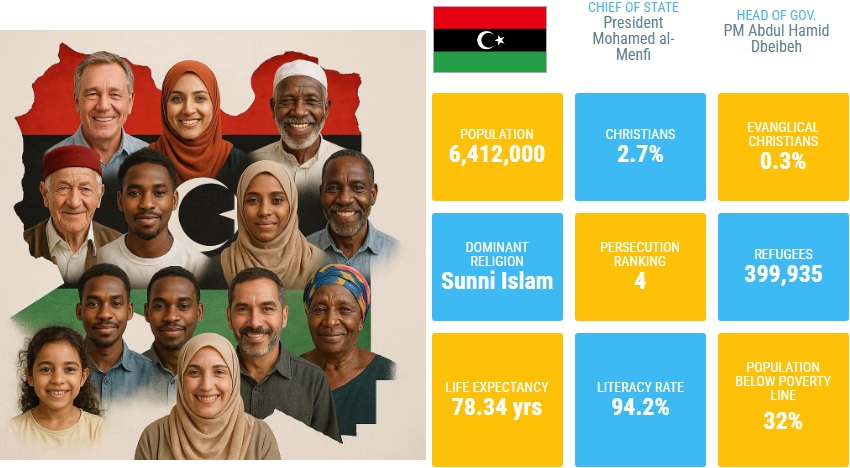
Libya sits on the southern shore of the Mediterranean. It has been a crossroads of Berber, Phoenician, Greek, Roman, Byzantine, Arab, and Ottoman cultures. Roman cities such as Leptis Magna and Sabratha testify to an ancient, cosmopolitan past; later Arabization and Islam shaped language, law, and public life. Modern Libya’s 20th–21st century history includes Italian colonization, the long rule of Muammar Qaddafi, the 2011 uprising, and the protracted fragmentation and intermittent civil wars since then. Contemporary Libyan culture blends tribal identities, Mediterranean cuisine and music, strong family and hospitality norms, and the influence of Islam on daily life and public institutions.
Christianity reached parts of Libya (notably Cyrenaica/Pentapolis and Tripolitania) in Roman and late-antique times. It produced local thinkers and Churches that lasted until the Muslim conquests in the 7th century. In the modern era, Christian communities are a tiny minority — made up mainly of migrant workers (Coptic Orthodox from Egypt, other Orthodox, Catholics, and some Protestant groups) and a small number of Libyans from a Muslim background. Religious activity by Libyans is tightly restricted in practice (proselytism is forbidden), and many Christians live quietly or as part of expatriate congregations.
Christian teenagers in Libya face multiple intersecting vulnerabilities: social pressure and stigma if they are from a Muslim background; legal and social restrictions on public worship or evangelism; the general insecurity of civil war zones (risk from militias, checkpoints, and coercion); and, for migrant teens (Ethiopian, Eritrean, Sub-Saharan), extreme danger in detention centers, trafficking networks and slave markets that have targeted migrants. Young Christians often have little safe access to consistent discipleship, Christian education, or even public fellowship — factors that make faith retention difficult amid trauma, migration pressures, and survival needs.