Prayer Points


Country Information
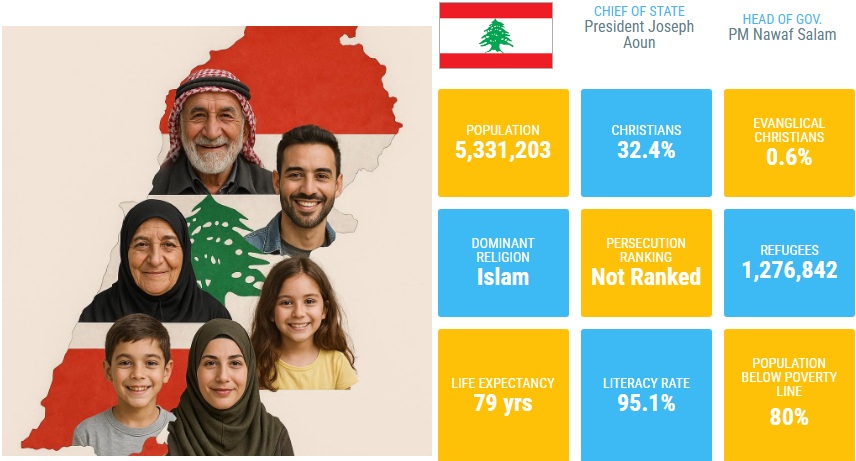
Lebanon, a land once known as the “Switzerland of the Middle East,” holds a remarkable history dating back to the ancient Phoenicians, whose maritime trade shaped Mediterranean civilization. Later ruled by the Assyrians, Persians, Romans, Arabs, and Ottomans, Lebanon became a cultural crossroads blending East and West. Its people are known for hospitality, artistry, and resilience amid hardship. Christianity was established in Lebanon during the earliest centuries of the faith—tradition holds that the Apostle Paul visited the region of Tyre and Sidon (Acts 21:3–6). Later, Saint Maron, a 4th-century hermit, inspired the founding of the Maronite Church, which has remained a significant Christian presence in the country. Christian monasteries in Mount Lebanon became havens of faith, scholarship, and freedom throughout centuries of turmoil.
Today, Lebanon’s Christian teenagers face serious struggles. Economic collapse, political corruption, and emigration have left many disillusioned and without hope. Social rejection is growing toward Christian converts from Islam, many of whom are excluded from families and threatened for their faith. Inter-church division between Orthodox, Maronite, and Evangelical communities weakens their witness. At the same time, legal obstacles complicate Christian influence in government and education.
Regional tension and conflict with Israel also endanger peace, limiting stability and opportunities for youth. Lebanon’s Church is under threat from external instability, spiritual fatigue, and disunity. To prevent Christianity’s decline among Christian families, believers must return to the biblical model of unity (Ephesians 4:3), forgiveness (Colossians 3:13), and faithful endurance (Hebrews 12:1–2). They must strengthen families in prayer, restore trust between denominations, and focus on Christ above politics, remembering that the light of the Gospel shines brightest in dark times.